Time Is Running out to Enact a Workplace Whistleblower Policy: New Requirements for Public Companies
The new whistleblower reforms were introduced into law from the beginning of the 2019 financial year with the Treasury Laws Amendment (Enhancing Whistleblower Protections) Act 2019 (Cth) (Amendment Act).
The Amendment Act aims to further encourage employees and officers of publicly trading corporations to report any compliance issues with the company to external agencies such as ASIC, the ATO or SafeWork. The Amendment Act alters sections of the Corporations Act 2001 (Cth) (Corporations Act) and the Taxation Administration Act 1953 (Cth) that provide prospective whistleblowers with greater protections from victimisation and prosecution.
As a key part of the changes, from 1 January 2020, certain public corporations will need to have in place a whistleblower policy that adequately describes the processes that the organisation will follow to comply with the Amendment Act. This requirement is implemented through the new section 1317AI of the Corporations Act.
Which companies does this apply to?
Section 1317AI applies to public companies, large proprietary companies and proprietary companies that are trustees of registerable superannuation entities.
Under section 45A(3) of the Corporations Act, a large proprietary company is a private company which satisfies two of the three following elements:
(a) $50 million in gross consolidated revenue;
(b) $25 million or more in consolidated gross assets;
(c) over 100 employees.
Note that there are no carve outs for public companies that are also registered charitable organisations with the Australian Charities and Not-for-Profits Commission – the whistleblower policy requirements are required for not-for-profits.
What are the requirements of a whistleblower policy?
Under section 1317AI(5), a compliant whistleblower policy must contain information about:
(a) the protections available to whistleblowers within the organisation;
(b) how and to whom an individual that might be a whistleblower can make a disclosure;
(c) how the organisation will support and protect whistleblowers;
(d) how investigations into a disclosure will proceed;
(e) how the company will ensure fair treatment of employees who are mentioned in whistleblower disclosures;
(f) how the policy is to be made available to officers and employees; and
(g) any other matters that are prescribed by the executive arm of government by regulations under the Corporations Act.
Because of the above, a whistleblower policy needs to be comprehensive and well thought out, and we recommend legal advice be obtained in their drafting so that each process and measure can be ticked off for compliance.
What if a company required to have a policy does not have one?
Failure to comply with section 1317AI is a strict liability offence under section 1311(1) and carries a civil penalty of 60 penalty units (currently $12,600) which will be enforced by the corporate regulator, ASIC. This makes it crucial for such a policy to be in place prior to 1 January 2020.
Conclusion
Given the complex requirements of the whistleblower regime, we highly recommend that all relevant companies seek legal advice and implement an appropriate whistleblower policy as soon as possible. This will not only avoid any fines or penalties but will also be an appropriate measure for good corporate governance.
If you have any legal questions related to commercial and corporate law, contact our team of lawyers at Chamberlains Law Firm!
If you have any questions regarding whistleblowing or need assistance with drafting a whistleblower policy before the 1 January 2020 deadline, please contact Mr Mark North of our Corporate & Commercial Team on (02) 6188 3600.
Related articles

Pty & Ltd – What Does It Actually Mean?
Do you often see the terms 'Pty' and 'Ltd' at the end of a business name? Do you sometimes wonder...
Read more about Pty & Ltd – What Does It Actually Mean?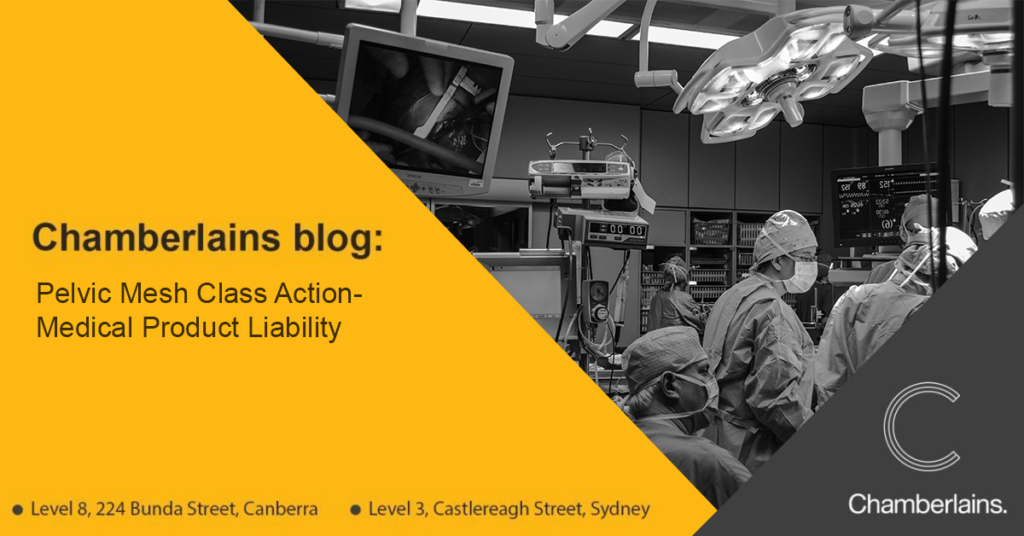
Pelvic Mesh Class Action- Medical Product Liability
On 21 November 2019, over two years after its commencement, the Federal Court of Australia handed down its monstrous 1500-page,...
Read more about Pelvic Mesh Class Action- Medical Product Liability
Shareholder Oppression: What Is the Threshold?
Recently, the Victorian Supreme Court handed down their judgment in Pacific Dairies Limited v Orican Pty Ltd [2019] VSC 647...
Read more about Shareholder Oppression: What Is the Threshold?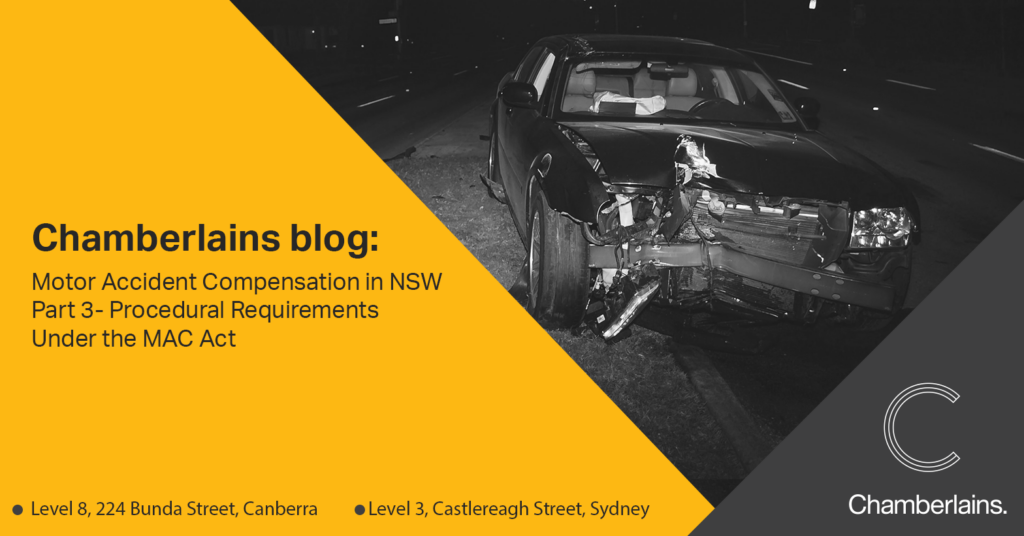
Motor Accident Compensation in NSW: Part 3- Procedural Requirements Under the MAC Act
This article continues our series on motor accident compensation in NSW. You can read about the modern motor accident compensation...
Read more about Motor Accident Compensation in NSW: Part 3- Procedural Requirements Under the MAC Act