The Doctrine of Exoneration
What is the Doctrine of Exoneration?
The doctrine of exoneration concerns the issue of a loan against a jointly-held property. It will apply when the borrowed funds secured against the property are only for the benefit of one party. Thus, this doctrine is able to change the respective interests in property ownership when an interest in the asset is created by one party.
Fact Scenario Example
For example, two parties jointly own a home that is subject to a mortgage. While the mortgage is for the benefit of both parties, one party takes out an additional loan for their own benefit and secures it against this jointly-held home. In this instance, the party who took out the loan against the property is responsible for the loan and any repayments will be taken from their share of the property.
Doctrine of Exoneration and Bankruptcy?
During bankruptcy, the party who has gone bankrupt is appointed a Bankruptcy Trustee. The Trustee’s role is to realise all assets including financial capital, property and anything else with a monetary value. The purpose of this is to begin repaying the bankrupt’s creditors and help the person to get out of debt. However, having a jointly shared asset with another party who is not considered bankrupt can be problematic. Hence, the purpose of this doctrine is to protect the other party’s assets from being realised in the circumstance of bankruptcy by the Bankruptcy Trustee.
Case Example: (Trustee in Bankruptcy of Onyearu) v Onyearu and Anor (2017)
A recent case in the United Kingdom discussed the applicability of this doctrine. The facts and rulings of this case are listed below.
Facts
- A married couple jointly owned their family home
- The couple had separate bank accounts
- Both parties contributed to the family’s living expenses. The husband paid for the mortgage and the wife paid for the utility bills
- The husband borrowed funds for his business against the family home
- The husband later became bankrupt and a Bankruptcy Trustee was appointed
- The Trustee wanted to sell the family home but the couple claimed that the doctrine of exoneration applied. This would mean that the wife’s share in the home was protected
Held
The Bankruptcy Trustee’s argued that the wife had an indirect benefit from the loan and the doctrine of exoneration should not apply. However, the court ruled in favour of the couple stating that the indirect benefit to the wife, through the husband’s loan, did not hinder the application of the doctrine.
Conclusion
This ruling in Trustee in Bankruptcy of Onyearu) v Onyearu and Anor (2017) upholds the importance of this doctrine in the court of law. It is a powerful doctrine that helps in protecting people who are not directly involved in bankruptcy.
How can we help?
The doctrine of exoneration is very complicated and may apply to you depending on your circumstances. At Chamberlains Law Firm we can help you to further understand the doctrine and see whether it applies to you.
If you have any questions in relation to bankruptcy or the doctrine of exoneration, get in contact with our team by phoning us 02 6188 3600.
This article was prepared with the assistance of Annabel Randall.

If you have any questions or concerns please contact our Insolvency & Restructuring Director Stipe Vuleta on 02 6188 3600
Related articles
Setting Aside Statutory Demands Part 2
As discussed in the previous article, there are various grounds which a debtor company can rely upon in order to...
Read more about Setting Aside Statutory Demands Part 2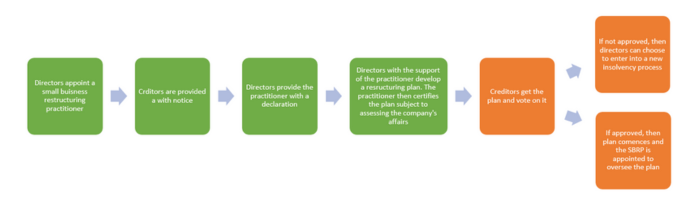
Small Business Restructuring
The Australian government introduced two significant new insolvency solutions following the enactment of the Corporations Amendment (Corporate Insolvency Reforms) Act...
Read more about Small Business Restructuring
ASIC Amendments: ASIC Corporations and Credit (Amendment) Instrument 2023/589
What is ASIC? The Australian Securities and Investments Commission (ASIC) is an independent Australian Government body that was established under...
Read more about ASIC Amendments: ASIC Corporations and Credit (Amendment) Instrument 2023/589
What Causes a Successful Invalidation of a Bankruptcy Notice? A Case Analysis on Defective Bankruptcy Notices
What is a Bankruptcy Notice? Pursuant to section 41 of the Bankruptcy Act 1966 (Cth) (the Act), a bankruptcy notice...
Read more about What Causes a Successful Invalidation of a Bankruptcy Notice? A Case Analysis on Defective Bankruptcy Notices